SCROLL THROUGH THE MEDIA BAR BELOW
At King Shocks Quality is #1

At King Shocks Quality is #1

By admin - November 30, 2011 - 09:38 am


Still winning races with eighteen-year-old shocks that have been pounded for countless thousands of miles on a big, V8 powered class eight truck is a real testament to the quality and value you get with King Shocks.
 
King Shocks Racers take top two spots in the grueling Australasian Safari.

King Shocks Racers take top two spots in the grueling Australasian Safari.

By admin - November 04, 2011 - 11:37 am


The Team of Steve Riley and John Doble, (2008 and 2009 overall winners), drove a smart race in their King Shocks equipped, 500hp Mitsubishi, Montero. After finishing third in the prologue, the team took the early lead after stage one. Over the next three days they maintained a steady pace that kept them in a solid second place overall. On day five, the team took the lead and stayed out front for the remainder of the safari finishing one hour and fifty minutes ahead of the second place team.
 
The

The "Napsta", Ben Napier

By admin - June 09, 2011 - 16:15 pm


One of the racers who have been caught up in the KOH whirlwind is Australian Ben Napier. Ben had been driving 4x4’s since he took his driver’s license test behind the wheel of the family’s 1972 Land Rover. Ben then stepped it up when a friend asked him to compete in the Australian W.E. Rock series, which he did, and they had great success. Ben was having fun in the WE Rock series but he had read stories and seen videos of the newly developed King of the Hammers race that really sparked his interest.
 
Samuel Hubinette Sweeps TORC Pro Light Season Opener at Red Bud

Samuel Hubinette Sweeps TORC Pro Light Season Opener at Red Bud

By admin - June 03, 2011 - 16:38 pm


There is an old saying that goes “the only job where you start at the top is digging a hole”. Apparently, driver Samuel Hubinette has never heard it. Samuel’s debut in the TORC off-road racing series netted back-to-back wins and placed him at the top of the Pro light leader board.
 
Carl Renezeder bounces off the wall and back to top form at Glen Helen.

Carl Renezeder bounces off the wall and back to top form at Glen Helen.

By admin - May 26, 2011 - 16:18 pm


King Shock’s racer Carl Renezeder used new shock packages on both his trucks to put on an impressive show in rounds 5 and 6 of the Lucas Oil Off-Road Racing Series held in Glen Helen, California. Carl’s Crew Chief, Bill Smith, has been hard at work with King to find the “little bits” as Bill puts it, which will give Carl an edge over the competition.
 
  • January 1-16 Dakar Rally, Chile South America
  • January 13-16 Autosports International, London, UK
  • January 14-16 Cal4wheel Winter Fun Fest, Grass Valley CA
  • January 14-16 SCORE Laughlin Desert Challenge, Laughlin NV
  • February 4-5 BITD Parker 425, Parker AZ
  • February 18-20 Dealer Expo, Indianapolis IN
  • February 18-20 SNORE Battle at Primm, Primm NV
  • February 26-27 Truck & Jeep Fest, San Mateo CA
  • March 4-6 Tierra Del Sol Desert Safari, Truckhaven CA
  • March 11-13 SCORE San Felipe 250, San Felipe Mexico
  • March 11-13 Truck & Jeep Fest, Oahu HI
  • March 19-20 Lucas Oil Short Course, Phoenix AZ
  • March 25-26 SNORE Mint 400, Las Vegas NV
  • April 9-12 NAFA Show, Charlotte NC
  • April 9-10 Truck & Jeep Fest, Puyallup WA
  • April 16-17 Lucas Oil Short Course, Phoenix AZ
  • April 18-22 Easter Jeep Safari, Moab UT
  • April 29-30 BITD Silver State 300, Alamo NV
  • April 30-31 TORC Short Course, San Antonio TX
  • April 30-31 Jeepers Jamboree, Rubicon Springs CA
  • May 13-15 SNORE 250, TBA
  • May 14-15 4 Wheel Jamboree, Springfield MO
  • May 14-15 Lucas Oil Short Course, San Bernardino CA
  • May 14-15 Truck & Jeep Fest, Dallas TX
  • May 28-29 TORC Short Course, Buchanan MI
  • June 3-4 SCORE Baja 500, Ensenada Mexico
  • June 11-12 Truck & Jeep Fest, Ontario CA
  • June 18-19 TORC Short Course, Crandon WI
  • June 25-26 Lucas Oil Short Course, Toole UT
  • June 25-26 Truck & Jeep Fest, Atlanta GA
  • June 26 TORC Short Course, Pikes Peak CO
  • July 8-10 4 Wheel Jamboree, Bloomsburg PA
  • July 23-24 TORC Short Course, Charlotte NC
  • July 23-24 Truck & Jeep Fest, Columbiana OH
  • July 30-31 SNORE Midnight Special, Primm NV
  • August 6-7 Lucas Oil Short Course, San Bernardino CA
  • August 13-14 TORC Short Course, Bark River MI
  • August 18-20 BITD Vegas to Reno, Las Vegas NV
  • August 20-21 Truck & Jeep Fest, Orlando FL
  • September 3-4 TORC Short Course, Crandon WI
  • September 15 TORC Short Course, Juliet IL
  • September 16-18 4 Wheel Jamboree, Indianapolis IN
  • September 17-18 San Sports Super Show, Costa Mesa CA
  • September 24-25 Lucas Oil Short Course, Surprise AZ
  • October 8-9 Off-Road Expo, Pomona CA
  • October 14-16 BITD Blue Water Challenge, Parker AZ
  • October 21-22 SNORE 250, Primm NV
  • November 1-4 SEMA Show, Las Vegas NV
  • November 5-6 Lucas Oil Short Course, Las Vegas NV
  • November 17-18 SCORE BAJA 1000, Ensenada Mexico
  • December 2-3 BITD Henderson 200, Henderson NV
  • December 9-11 SNORE Rage at the river, Laughlin NV
  • December 10-11 Lucas Oil Short Course, Phoenix AZ

How to pick the proper shocks for your vehicle

Basic information needed when ordering shocks

General mounting information and guidelines

How shocks create heat

INTRO:

King Shocks has a comprehensive product line with shocks available for any application from stock trucks to all out race vehicles. Selecting the shock you need depends on your driving style, your vehicles specific configuration and its intended use. A shock that works well on a lightweight sand car or UTV cannot deliver the same results on a heavy 4X4 truck or unlimited race vehicle.

Stock vehicles are sometimes limited when it comes to shock upgrades due to clearance issues that may exist. If you have a stock or lifted truck, the easiest way to get a huge performance advantage is to install one of our bolt on OEM upgrade kits that are designed to work with your vehicle. The OEM upgrade kits have already been subjected to hours of real world testing to develop the correct damping curves and/or spring rates to match your vehicle. The same is true if you need shocks for your UTV, King has shock upgrade kits for stock or long travel UTV's that deliver incredible performance.

King Shocks makes many different shocks that are designed to work with your suspension. In order to select the correct shock you need to determine what each shock type does.

COILOVER SHOCKS:

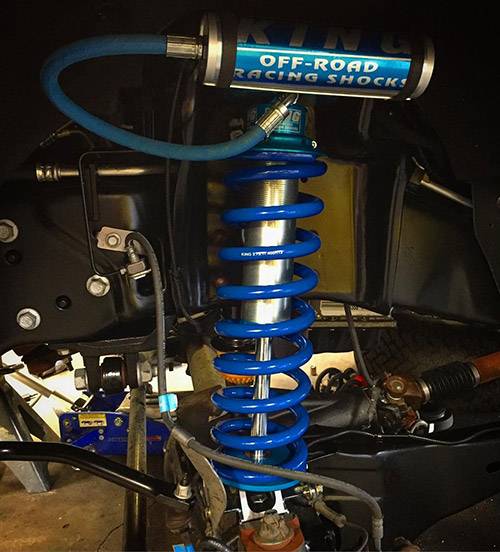
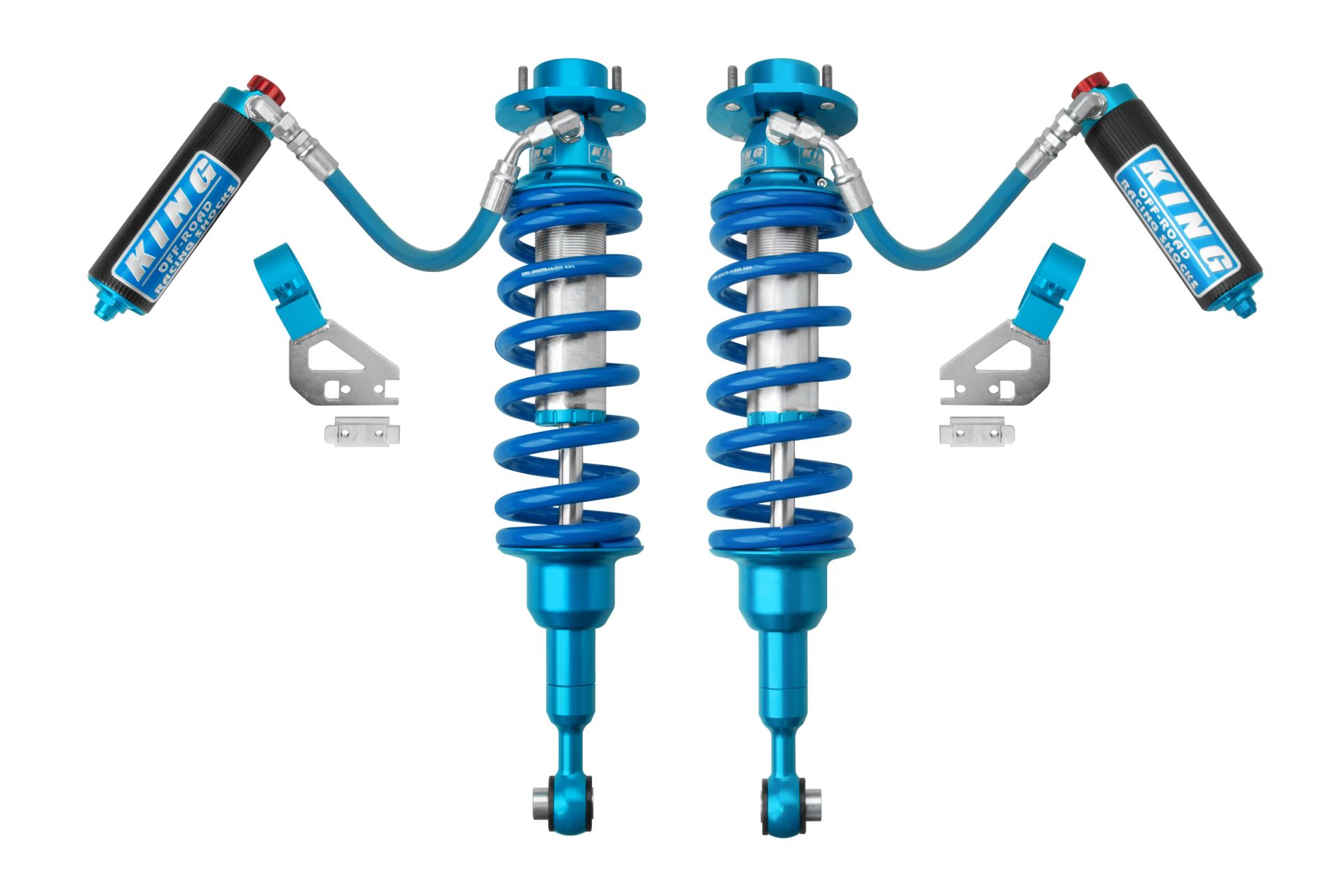
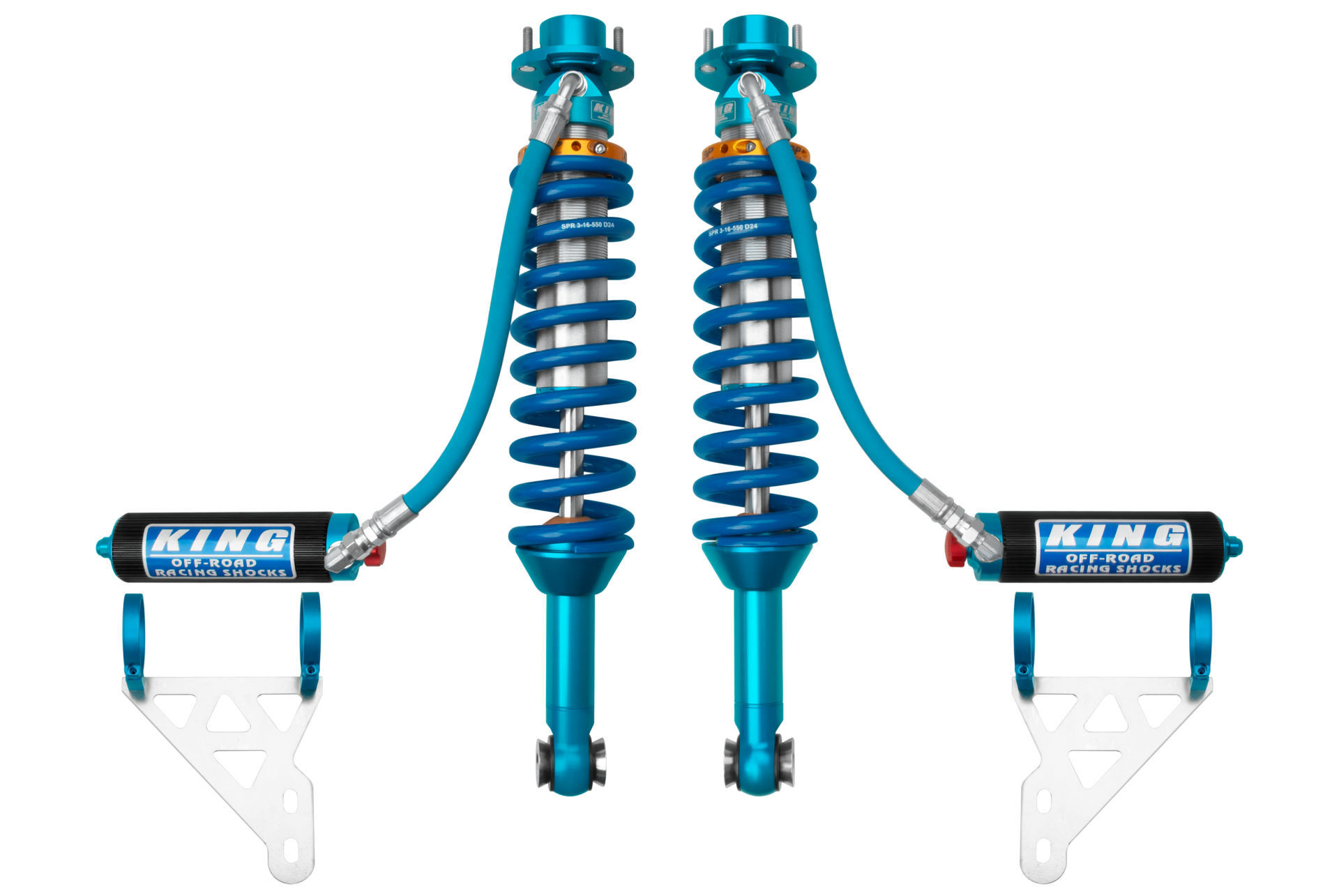
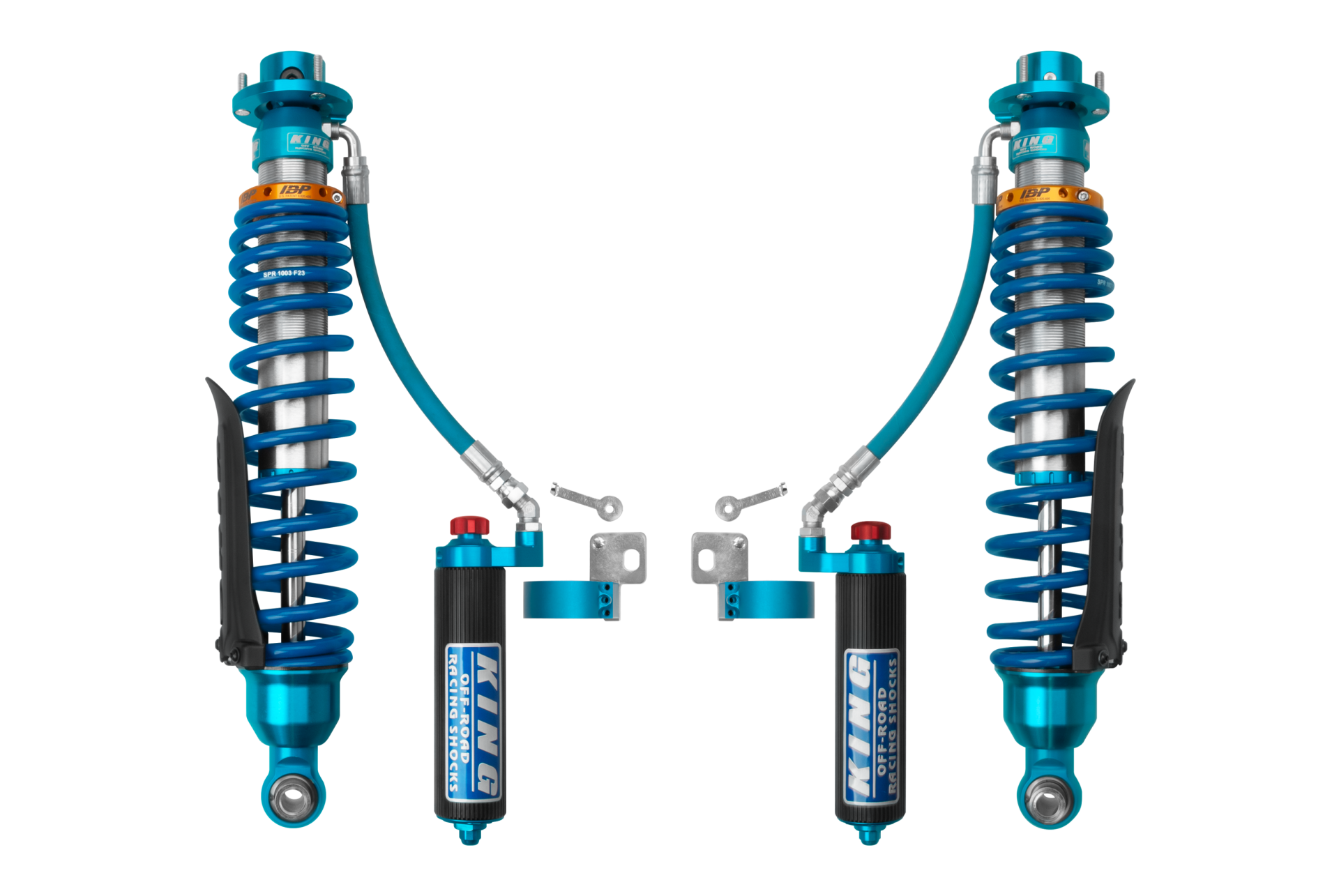
A coilover shock incorporates a coil spring mounted around the outside of the shock body that holds the vehicles weight. A single coilover on each wheel will hold the vehicle up and provide damping. You can also run a coilover shock as a coil carrier when used with a bypass shock. When used as a coil carrier the coilover has no valving inside it only suspends the cars weight while the bypass shock does the damping. A third coilover configuration combines two shocks in one. It includes a coil spring on the lower portion of the shock body to support the vehicle weight with a bypass shock on the top portion of the shock body to control the damping. The Coilpass shock was developed for racing classes that are limited to one shock per wheel. Cars that run a Coilpass are usually designed to accommodate the additional length of the Coilpass shock.

BYPASS SHOCKS:

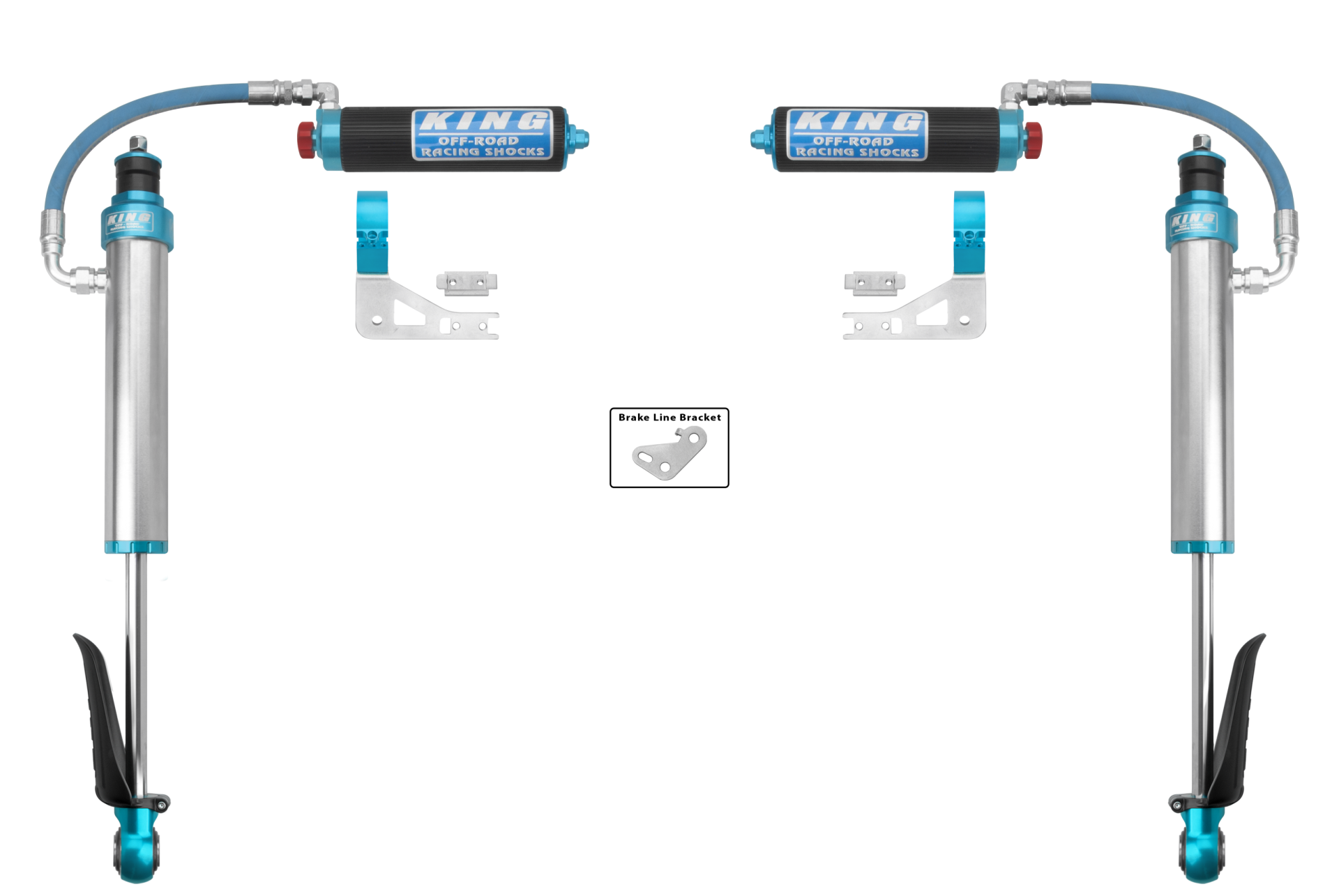
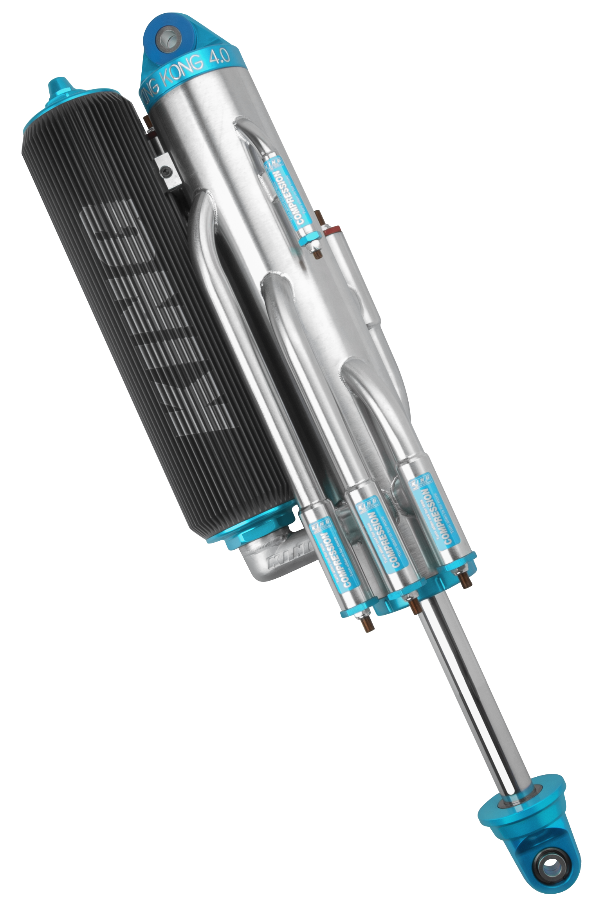
Bypass shocks provide externally adjustable damping. Bypass tubes are welded to the outside of the shock body that allow the shock fluid to flow around the piston. Each tube has a bypass valve that controls how much fluid can pass. When the valve is opened up, it allows fluid to pass easily (soft). When the valve is closed down, less fluid is able to pass (firm). The tubes are arranged on the outside of the shock according to the intended application. They are position sensitive, which means they are able to individually control the amount of damping in several stages as the piston cycles up and down. The bypass valves allow you to achieve non-linear damping curves which means you can have the shock soft at ride height for a smooth ride and progressively firmer as the shock compresses for the bigger bumps. Bypass shocks are used with an existing means of supporting the vehicle like leaf springs or a coilover. Bypass shocks are necessary if you are subjecting your vehicle to high speeds over rough terrain

SMOOTH BODY SHOCKS:

King Smoothie shocks are a major upgrade from your OEM shocks. They contain the same race-proven damping technology and superior construction that King's all-out race shocks have. Smoothie shocks are used with an existing means of supporting the vehicle like leaf springs, torsion bars or coils. They have adjustable valving and are serviceable with simple hand tools. Several reservoir styles are available. Smoothie shocks with external reservoirs can be fitted with the Wide Range Compression Adjuster that allows you to change the compression valving from very soft to very firm with the twist of a knob. The Wide Range Compression adjuster is the perfect addition for vehicles that tow or occasionally carry heavy loads or additional passengers. King Smoothie shocks are custom built in several lengths and mounting options to fit your vehicle.

AIR SHOCKS:

King air shocks provide a compact and lightweight option when used in the appropriate application. Air shocks ride on the pressurized gas charge inside (nitrogen). All air shocks are limited in their use by the physical properties of nitrogen gas. Nitrogen expands when it gets hot and contracts when it cools. In a lightweight rock crawler that only travels a few hundred yards during a full day of competition this is not a problem. If you plan on running on the trail or the street for any length of time it becomes an issue. When shocks work, they create heat. The heat causes the gas inside an air shock to expand which then extends the shock and changes the damping, it gets stiff. The same thing happens in reverse when the gas inside cools. If you are driving a competition only rig and are looking to save weight above all else, air shocks may be the right shock for you.

IN THE END:

Regardless of your application, King Shock's technicians have a solution to your damping needs. King Shocks will work with you to achieve the best handling and performance possible from your suspension. If a custom project is needed, King is the industry leader in advanced design, manufacturing and engineering. When it comes to your special engineering projects, King Shocks has the necessary depth of knowledge to deliver everything from conceptual design consultation to working prototypes, production parts or one off custom creations. Whether you are restoring a vintage racer, building a monster truck, or in the conceptual stage of a brand new chassis, we have the knowhow and the tools necessary to help you accomplish your goals.

BASIC INFORMATION NEEDED WHEN ORDERING SHOCKS

If you are building your own chassis or upgrading to King Shocks on your existing vehicle you will need to know some technical information before you place your shock order. The suspension will need to be cycled from full extension to full compression so usable suspension travel (including articulation on straight axle applications) can be measured. You will need to determine the desired ride height, which is measured from the lowest point on the chassis to level ground. You need to determine the location of the ride height in relation to the suspension travel. It's common to set the ride height at mid-travel but you can increase droop by sitting lower than the mid-point or conversely increase up-travel by sitting above the mid-point of travel. The weight of the vehicle will be needed to help determine spring rate. If you have access to wheel scales you can check each wheel separately. Is the vehicle front engine, mid engine or rear engine? What is the front to rear weight ratio? What size tires are you using? What are your track width and wheelbase dimensions? What speeds will you be running? What type of terrain will you encounter? The more detail you can provide the easier it will be to design your shocks.

Type of vehicle:
Suspension travel in inches:
Desired ride height:
Suspension travel from ride height:
Up-travel:
Droop:
Vehicle overall weight:
Front to rear weight ratio:
Front, Mid or Rear engine placement:
Tire size:
Track width:
Wheelbase:
Predicted average speed:
Terrain encountered:

GENERAL MOUNTING INFORMATION AND GUIDELINES

King Shocks is dedicated to leading the way in design and technology through continuous testing and product development work with top teams worldwide. One of the characteristics that sets off-road apart from other forms of racing is the lack of "belly-button" cars that are identical with the exception of a headlight decal or fiberglass body panels. Regardless if you are Rock Racing, Crawling, or racing Short Course, Rally or Desert Off-road, most chassis designs are totally unique to the builder and change frequently as new technology is continuously evolving. There is one constant that never changes, King Shocks can and will, build whatever shock is necessary to provide the maximum suspension performance for your vehicle. King Shocks got their start building custom shocks over a decade ago and they continue to excel at it to this day.

King offers a multitude of custom options and features to choose from for each shock type they produce. The type of shock (or shocks) you need will be determined by several factors including their intended use, the weight of the vehicle, how the vehicle is suspended, in example leaf springs, torsion bars or coilover shocks, the speeds you will reach and the terrain you operate in. A Rock Crawler may travel only a mile or two at low speeds during an entire competition or trail run. A simple, light weight, airshock might be the perfect choice. Conversely, an 8000 Lb. Trophy Truck with over 30 inches of rear wheel travel reaching speeds in excess of 100 mph for hours on end needs extensive damping control, bypass adjustability and components able to withstand the elevated temperatures, incredible shaft speeds and dynamic loads generated.

Suspension design is difficult enough when the travel limits are 2-3 inches, when you are traveling 2-3 feet the variables grow exponentially. King Shocks won't go so far as to tell you how your chassis or suspension should be designed but there are a few general principles that will help to make your shock packaging more functional. Shock shafts extend and compress in a linear path while most suspension components travel in an arc. As a general rule, the shock should be mounted so the shaft is as close to 90 degrees, as practical, to the moving suspension member at full compression. During normal operation your King shocks can reach high temperatures. They should be located away from potential spills of flammable liquids like fuel, oil or transmission fluid. Shocks should be exposed to direct airflow when possible to aid cooling and isolated from external heat sources like coolers, turbochargers or exhaust pipes. Excessive heat exposure may damage the seals. Shocks and reservoirs should be securely mounted taking care to provide ample clearance between the shocks and the suspension and/or chassis throughout the entire range of motion to prevent damage to the shocks from contact, or excessive side loading or binding. When clamping remote reservoirs locate the hose clamps at either end of the reservoir to allow expansion and prevent crushing the cylinder. Make sure hoses will not rub against the chassis or body panels or come in contact with sharp objects that may cut into the hose. Care needs to be taken when welding or grinding. Grinding sparks and weld splatter can damage shafts, hoses and shock bodies. When welding around your shocks, make sure the ground strap is directly adjacent to the area being welded. If the welding current is allowed to travel through the shock shaft and arc to nearby metals, permanent damage will be made to the hard chrome plating on the shafts.

HOW SHOCKS CREATE HEAT

Many are familiar with the outside of a shock but don't know what happens inside. Shocks are comprised of a body that is in the form of a tube that attaches to the chassis of the vehicle in most cases. The other end of the shock is a shaft that mounts to the moving parts of your suspension. The shaft moves in and out of the shock body as the suspension goes up and down. The shock body is filled with specially formulated fluid. The fluid has a high viscosity. Viscosity is the property of resistance to flow. Water has a low viscosity, honey has a high viscosity. A piston is attached to the end of the shaft. As the shaft cycles in and out, the piston is pushed and pulled through the fluid. The piston has a wear band on the outside diameter that allows the piston to slide inside the bore and seals against the shock body forcing the fluid to go through openings in the piston known as ports. The ports allow a path for the fluid to pass through the piston but for the most part, they don't control the amount of fluid that is allowed to flow. Thin plates called shims are stacked on top and bottom of the piston covering the ports. The shims are made in different diameters and thicknesses. As the piston moves through the fluid, the shims flex, opening the ports and allowing the fluid to pass through. The ports open and close depending on the velocity or speed of the piston moving through the shock fluid. Thicker shims flex less allowing less fluid to pass making the shock firmer. Thinner shims will create less resistance making the shock softer. By restricting the high viscosity shock fluid as it moves through the ports, the fluid is subject to friction that in turn creates heat. The heat dissipates the energy produced as the suspension cycles. There are thousands of shim configurations possible to precisely tune the shock to match your vehicle and driving style. The right shocks will enhance all aspects of your driving experience including traction, braking and steering. If you are building a new vehicle or upgrading an existing one, King Shocks has what you need to get the most performance possible out of your suspension.

Mad Media